
From Tradesperson to Supervisor and Operations Leader: Build the Next Level of Evidence
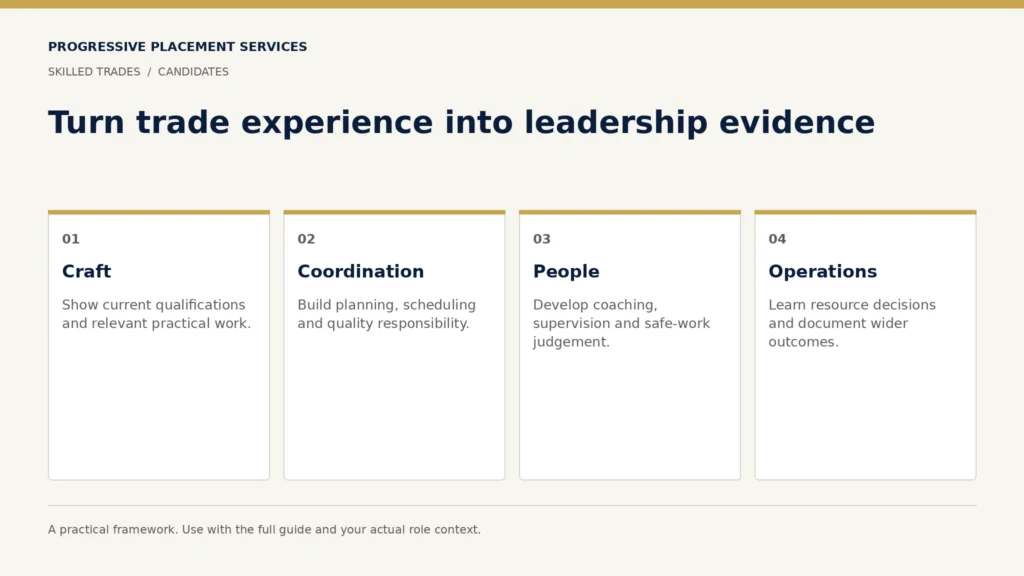
Moving from tradesperson to supervisor changes the evidence an employer needs. Technical competence remains relevant, but you also need to explain how you organise work, support other people, recognise problems and make decisions within your authority. Being the person everyone asks for help is useful experience; it is not the whole supervisory role.
Start with the responsibilities of the next job rather than assuming one certificate or a longer service record makes the step automatic. This guide includes a progression worksheet and a fictional example you can adapt to your own experience.
Understand what changes between roles
Titles vary between employers, worksites and trades. Ask what the job actually controls: a task, crew, shift, project, shop or wider operation. Clarify reporting lines and how technical, people and commercial decisions are divided.
| Role focus | Responsibility to understand | Evidence worth developing |
|---|---|---|
| Trade work | Competent delivery of the work within your qualifications | Processes, equipment, standards and practical experience |
| Crew or task leadership | Coordinating work and communicating changes | Planning, handovers and helping others work effectively |
| Supervision | Organising people and delivery within a defined area | Scheduling, feedback, escalation and safe work leadership |
| Operations management | Balancing resources and performance across activities | Budgets, service or project priorities and manager development |
This comparison is a planning aid, not a formal classification of every workplace. Review the actual role and any applicable qualification or worksite requirements.
Seek a real assignment with clear support
Ask your supervisor where you could take a defined next responsibility. Examples include coordinating a planned maintenance task, leading an agreed shift handover or helping induct a new worker under the appropriate supervision. Agree the boundaries before the work starts.
Confirm who makes decisions about staffing, technical acceptance, changing methods or stopping and escalating a problem. Do not expand a learning assignment into authority you have not been given. Ask how the work will be reviewed and who is available when you are uncertain.
A useful assignment gives you a chance to plan, communicate, act and learn. Merely adding a senior-sounding title to a resume does not explain those capabilities. Record the responsibility and what you actually delivered.
Build safety leadership appropriate to the jurisdiction
Supervision includes understanding the work's hazards and the applicable responsibilities. In Alberta, the government's worksite-party obligations guidance sets out specific supervisor duties. Other jurisdictions and workplaces have their own requirements; verify the rules and training relevant to the job.
For career development, seek feedback on how you communicate a known risk, check understanding and escalate a concern. Follow the employer's approved processes and do not improvise beyond your competence or authority. Training should relate to the actual work rather than being collected only to lengthen a resume.
Avoid judging safety leadership through an unsupported claim such as “zero incidents because of my supervision.” A period without a reported incident does not explain all the conditions. Describe the planning, communication or follow-through you can substantiate.
Practise planning, quality and handovers
Begin with a small work package. What must be ready before it starts? Which people, materials, tools, permits or approvals are relevant? Identify dependencies and agree how progress and changes will be communicated.
Review quality as well as completion. A task finished on time may still create rework or a poor handover. Ask what “complete” means for the next person who uses the equipment, receives the project or takes over the shift.
Use a short end-of-task review: what differed from the plan, why did it differ and what should change next time? Distinguish a problem you could influence from a constraint outside your control. That explanation is stronger career evidence than blaming another crew or claiming the work was effortless.
Learn how to support and direct people
Supervision requires clear expectations and respectful follow-through. Practise explaining a task, checking understanding and giving specific feedback on the work. Adapt your communication to the person's experience and the situation while retaining the required standard.
Seek opportunities to support apprentices or newer workers within the arrangements approved for your trade and workplace. Explain your own role accurately: helping someone learn a task is different from holding a formal training or supervisory appointment.
For difficult performance or conduct matters, use the employer's process and appropriate support. You do not need to solve every people issue alone to demonstrate leadership. Knowing when to seek help is part of taking responsibility.
Add commercial understanding as your scope grows
Learn how your work affects cost, downtime, delivery commitments and the use of labour or equipment. Ask to review a relevant estimate or job-cost report with someone responsible for it. Understand the assumptions before suggesting an efficiency improvement.
A useful discussion might compare planned maintenance with repeated emergency repair, or explain why a cheap material choice creates downstream work. Keep the decision within the proper approval process. Do not change a safe method or required standard to make a cost example look favourable.
If you want an operations role later, build experience beyond one crew. Cross-team planning, supplier coordination, scheduling and leading other supervisors can reveal different development needs. The executive leadership skills guide explains how to connect those responsibilities to a longer-term evidence plan.
Copy this progression worksheet
Use this original worksheet with your manager or a suitable mentor. Choose one priority rather than trying to practise every area at once.
| Area | Next responsibility | Evidence to record |
|---|---|---|
| Planning | Coordinate an authorised task or work package | Dependencies, plan changes and delivery |
| Safe work | Practise the approved communication and escalation process | What you communicated, checked and followed up |
| Quality | Agree completion and handover requirements | How the work met the standard and what needed correction |
| People | Support a defined learning or coordination task | Feedback, clarity and the boundary of your role |
| Commercial understanding | Examine a job-cost or resource decision | Assumptions, recommendation and approved result |
After the assignment, record what went well and where support was needed. Ask someone who observed the work to describe the behaviour they would trust you to repeat. That is more useful feedback than a general statement that you have “leadership potential.”
Translate the experience into an application
Fictional example: a qualified tradesperson helped coordinate a planned shop shutdown. The person agreed the task sequence with the supervisor, checked parts readiness and maintained the shift handover log. A clear resume statement would describe those actions and the scope.
It should not say the person “managed all plant operations” or attribute every shutdown outcome to them. If a supported result is available, add it with context. Include the trade, equipment, processes and current credentials needed to assess the application.
For an example focused on industrial maintenance, the Canadian millwright resume guide shows how to describe equipment, your own actions and supporting work evidence.
For broader career comparison, use the skilled-trades career guide and the trade-demand comparison. The employer hiring checklist shows the kinds of work evidence a recruiter may ask about.
Choose a suitable opportunity and next step
Read the actual vacancy before applying. Check the required experience, current qualifications, workplace, schedule and work arrangements. A leadership-development plan does not establish eligibility for every supervisory job, and a qualification does not automatically establish management readiness.
PPS's Skilled Trades practice describes its employer work in Northern Alberta. Candidates based anywhere in Canada can register their trade and leadership experience, noting preferred work and locations. Apply directly to a relevant advertised role; general registration expresses interest in current or future opportunities.